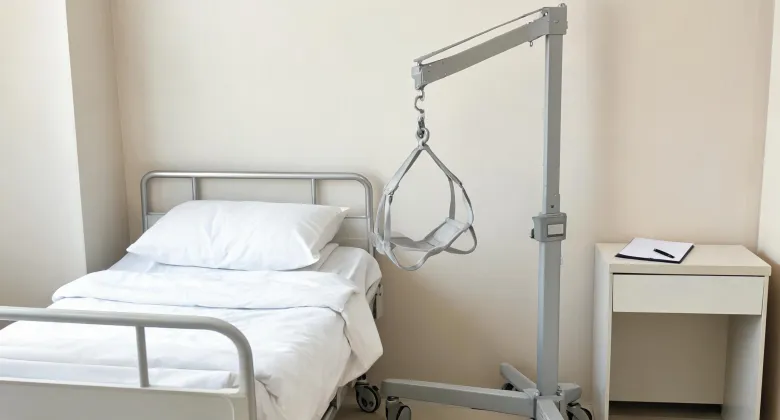
When the Cheap Lifts Arrived (and Nobody Could Use Them)
In March of last year, I signed off on twelve portable patient lifts. They were about $80 cheaper per unit than what our director of nursing had suggested, the reviews were solid, and the specs on the product page looked fine. I felt pretty good about the savings.
Two weeks later, the floor supervisor caught me in the hallway. Three of our heavier residents—two of them over 350 pounds—couldn't use the new lifts safely. Our old units were rated higher. The vendor's page had "capacity: 400 lbs" in the title, but the fine print said "recommended working load: 330 lbs." We'd just spent three grand on equipment half our population couldn't use.
That's the surface problem with patient lifts sourcing: the price and the headline specs look comparable, so you buy on price and move on. The real problem is that nobody warns you "patient lift" isn't one product. It's a family of devices that solve completely different problems, and if you don't know that going in, the price sheet will help you buy the wrong thing.
Why "Patient Lift" Doesn't Mean What You Think It Means
If you've only ever sourced one type of lift, it's easy to assume they're interchangeable. They aren't. Here's what I've picked up over three years and roughly forty lift orders across three facilities.
A manual patient lift is the basic setup: a metal frame, a sling, and a hand crank or pump. No battery, no motor. Cost is low, maintenance is low, and for low-frequency transfers with lighter residents, it's honestly fine. What nobody tells you is that "manual" also means "your caregiver does the work." If your staffing ratio is thin, or if you have frequent transfers, that becomes a liability—literally.
A hydraulic patient lift uses a hydraulic pump—sometimes hand pump, sometimes electric—to raise and lower the resident smoothly. The hydraulic lift for person setups we've bought since are rated for higher weights, tend to have better stability, and require less caregiver strength per transfer. The tradeoff is basically maintenance: hydraulic seals wear out, and if you're not doing scheduled service, you find out the hard way.
Hydraulic patient lifts also cost meaningfully more per unit. When we compared quotes in 2024, the hydraulic units we shortlisted ran roughly 40% higher than the comparable manual units. So if you're a small facility with lighter residents and predictable transfer patterns, spending the extra money isn't automatically the right call—despite what every hydraulic vendor will tell you.
A portable patient lift is exactly what it sounds like: foldable, designed to move between rooms, usually battery-powered. Great flexibility. The limitation—and this is where my March purchase fell apart—is that portability tends to cap maximum capacity and stability. Portable units are also the ones most likely to get damaged, because they're dragged between rooms all day.
The bottom line: the lift type should be chosen based on your resident population and your caregiver workflow, not on the price sheet. The price sheet will absolutely let you buy the wrong thing and then wish you hadn't.
What It Actually Costs You When You Get This Wrong
Here's where I'll be honest about my own mistakes, because I think that's more useful than another spec table.
Caregiver injuries are the big one. The Bureau of Labor Statistics and OSHA have both documented for years that nursing and residential care workers have among the highest rates of musculoskeletal injuries of any industry. Manual lifts contribute to that. A facility that keeps using manual patient lifts for heavy residents because "we already have them" is, in practice, passing the risk to its staff. Those injuries cost money—workers' comp, turnover, replacement training—that never shows up on the equipment budget line.
I knew I should have verified the actual working load capacity before I placed that order. I also knew we had three residents over 350 pounds. I told myself "the specs looked the same." They didn't. That was a $3,200 mistake paid out of the operations budget, and it made the whole procurement function look careless to the finance director.
You end up buying twice. The cheapest path is almost never the lowest total cost. We bought the wrong portable lifts in March, then bought four manual units in June to cover the heavy residents, then replaced the whole fleet with hydraulic units in September when the portable ones started failing inspections. The September order was the one we should have placed in the first place. The March and June orders were the cost of learning.
And staff start improvising. When the right lift is in the wrong wing, caregivers make do. They use a lighter-rated lift for a heavier resident. They skip the sling check. They transfer manually because it's faster than finding a second person. That part scares me more than the budget, and it's the part a lot of procurement people never see because we don't work the floor.
What I Do Now (and What I'd Tell Another Buyer)
It took me about three years and forty-odd orders to understand that this category only rewards buyers who understand the use case first. Here's the process I use now.
1. Define the population before you open a quote. I get a distribution of resident weights from the DON, plus transfer frequency per shift. That single page of data tells you more about which lift type you need than any vendor call ever will.
2. Get three quotes on the same written spec. Not three quotes on "a patient lift"—three quotes on a specific spec you've written down. If a vendor can't quote against your spec, that's a red flag about how they'll handle a service issue later.
3. Ask for SKU-level documentation. Don't ask "are your lifts FDA-cleared?"—ask for the device listing documentation for the exact SKU you're buying. Anyone selling medical devices legitimately should be able to provide that without drama. Verify it yourself rather than taking a PDF at face value.
4. Attach a maintenance plan from day one. Hydraulic units need scheduled service. Portable units need inspection logs. Manual units need less—but "less" isn't "none." If you're sourcing without a maintenance plan attached, you're renting, not buying.
Now, the honest-limitation part. If you're a small facility—say under 30 beds, mostly lighter residents, strong staffing—the cheaper manual patient lift may genuinely be the right pick. I'm not going to tell you to always buy hydraulic. The hydraulic lift for person setups I now prefer cost real money and require service infrastructure. When the use case doesn't match, spending more isn't more responsible, it's just more expensive.
What I would tell another admin buyer walking into Patient Lifts Sourcing for the first time: spend a week with the floor staff before you open a single quote. Watch how many transfers happen per shift. Ask which lifts the caregivers avoid and why. That week will save you more money than any price negotiation you can run afterward.
Because the thing I wish someone had said to me is this: the problem was never that we couldn't find a cheap lift. The problem was that we didn't understand what we were buying until after we'd already bought it.